The development lifecycle, made visible.
AceLM is being designed to connect each stage of development to project records, review decisions, and verification evidence.
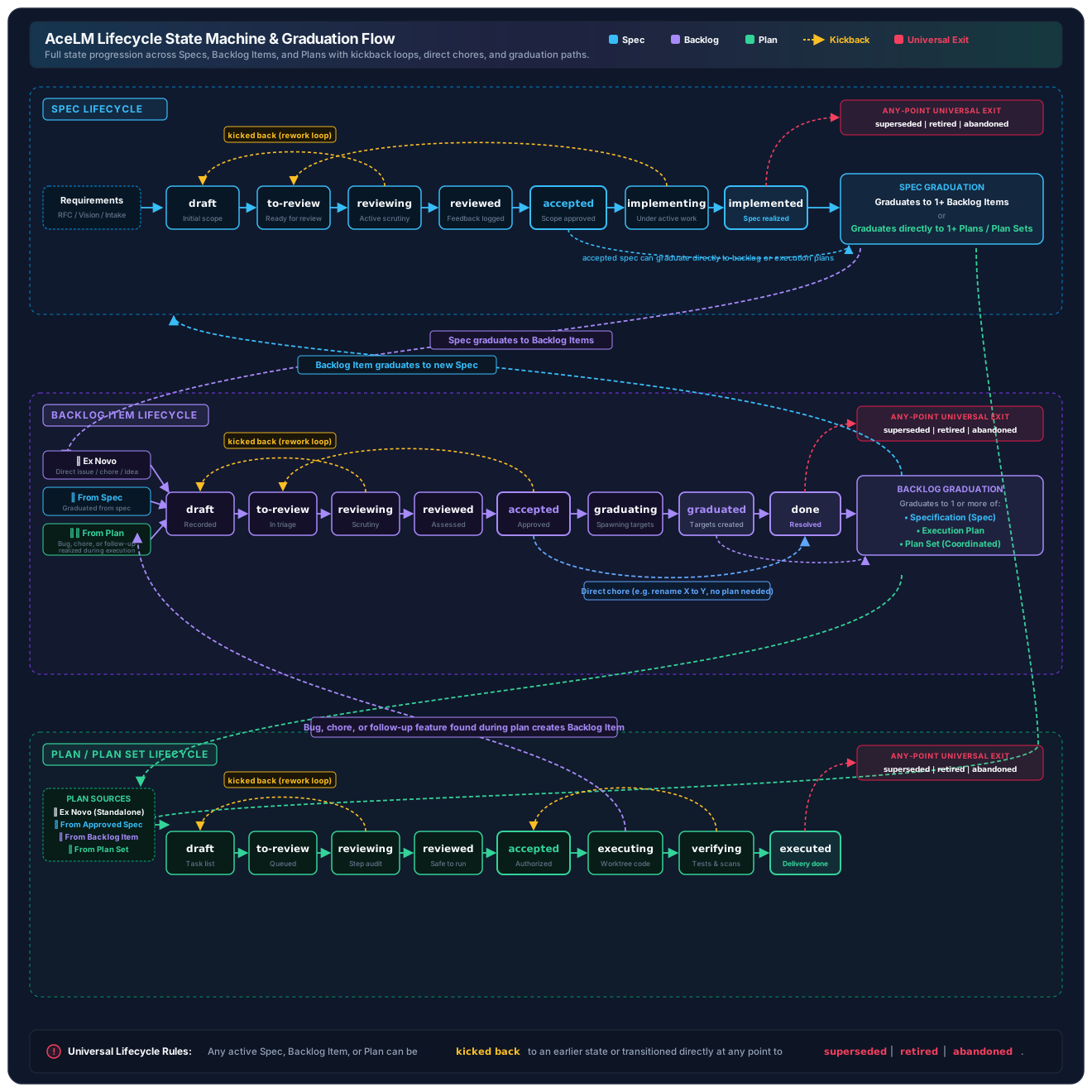
Artifact lifecycle flowchart.
Specifications, backlog items, and plans follow explicit, observable state machines with kickback recovery loops, multi-artifact graduation, and universal exit rules.
Specification
SpecBacklog Item
BacklogPlan / Plan Set
PlanUniversal Lifecycle Rules Across All Artifacts
Every active entity (Spec, Backlog Item, Plan, or Plan Set) at any point in its lifecycle can be kicked back to an earlier stage for rework, or transitioned directly to one of three universal terminal states: superseded (replaced by a newer artifact), retired (deprecated or obsolete), or abandoned (cancelled with audit notes).
The 6-stage verification pipeline.
From specification to release-readiness gating, AceLM tracks evidence across each delivery milestone.
Planned security checks, regression testing, and release reviews connect delivery decisions to recorded evidence.
1. Specify
Record requirements, scope, constraints, and acceptance criteria.
2. Plan
Break work into reviewable tasks and identify dependencies.
3. Review
Evaluate the approach and record the required authorization before execution.
4. Build
Execute scoped changes in separate Git worktrees and inspect the resulting diffs.
5. Verify
Run project-defined regression tests, builds, linting, type checks, and configured security checks. Record the results and evaluated revision.
6. Check release readiness
Evaluate required evidence, documentation, and unresolved findings. Surface blockers for the team's release decision.
A passing check has a scope.
Verification records are intended to show what ran, what it evaluated, and what remains unresolved. Passing checks provide evidence for the tested scope; they do not establish that every requirement is met or every vulnerability is absent.